Source Double Top Nomex Classical Guitar for Concerts, Studios, and Education
Compare 30 double top nomex classical guitar options from verified manufacturers. Explore variations in wood materials, top construction, and customization to find the right instrument for professional performance or educational use.
Key considerations
Products List


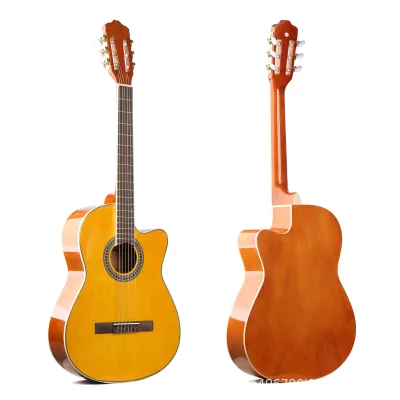


![[Hot Sale]39" Classical Guitar for Beginners Guitarra](https://image.made-in-china.com/221f0j00CzMoyOnsyEbI/-Hot-Sale-39-Classical-Guitar-for-Beginners-Guitarra.webp)


Comprehensive Sourcing Guide
Strategic Sourcing Guide for Double Top Nomex Classical Guitars
The global market for high-performance classical guitars has seen a significant shift toward advanced acoustic engineering, with the double top Nomex construction emerging as a premium standard for professional and semi-professional instruments. For B2B procurement officers and sourcing managers, identifying reliable supply chains for these specialized instruments requires a nuanced understanding of material science, manufacturing tolerances, and supply chain logistics. This guide provides a comprehensive framework for sourcing double top Nomex classical guitars, focusing on verified technical attributes, supplier evaluation criteria, and risk mitigation strategies based on current market observations.
Technical Architecture and Material Specifications
The defining characteristic of a double top Nomex classical guitar lies in its soundboard construction. Unlike traditional solid spruce tops, this design utilizes a sandwich structure where Nomex honeycomb cores are bonded between two thin layers of spruce. This configuration significantly reduces the weight of the soundboard while increasing its stiffness-to-weight ratio, resulting in enhanced projection, sustain, and dynamic range. When evaluating product listings, buyers must verify specific material claims. Observed specifications indicate that high-end models often feature a "Double Cedar + Nomex" or "Nomex Double Top" configuration. The choice between cedar and spruce affects the tonal profile, with cedar typically offering a warmer, darker tone and spruce providing a brighter, more articulate response.
The back and side materials are equally critical in determining the instrument's resonance and durability. Market data reveals a divergence in material sourcing, with some manufacturers utilizing "Laminated Mahogany" for cost-effective models, while premium tiers specify "Solid Indian Rosewood" or "Solid Santos" rosewood. The distinction between laminated and solid wood is a primary cost driver; solid woods offer superior aging characteristics and tonal complexity but require more rigorous drying and seasoning processes. Additionally, the neck material is frequently listed as "Mahogany," which provides the necessary structural integrity to withstand string tension while maintaining a comfortable profile for the player. The fingerboard material, often observed as "Rosewood," must be properly seasoned to prevent cracking and ensure smooth playability.
Compliance, Certification, and Quality Standards
In the B2B context, compliance extends beyond simple product safety to include adherence to international trade standards and material sustainability. While specific certification documents were not universally listed in the provided product data, buyers must verify that suppliers adhere to relevant international standards for wood sourcing and chemical usage. For instruments originating from major manufacturing hubs like China, particularly regions such as Jiangsu, it is essential to confirm that the wood used for solid components (such as Indian Rosewood or Mahogany) complies with CITES (Convention on International Trade in Endangered Species of Wild Fauna and Flora) regulations. This is particularly relevant for Rosewood species, which are often subject to strict export controls.
Furthermore, the finishing process, often described as "High Glossy" in product attributes, must be evaluated for compliance with VOC (Volatile Organic Compound) regulations in target export markets. Buyers should request Material Safety Data Sheets (MSDS) for all lacquers and finishes used to ensure they meet the safety standards of the destination country. The structural integrity of the instrument also relies on the quality of the binding and hardware. Observations of "ABS+5 lines" binding suggest the use of synthetic materials for durability, whereas "Solid Rosewood" binding indicates a traditional, high-end approach. Procurement teams must verify that these components are sourced from suppliers who can provide traceability documentation for the raw materials used.
Cost Drivers and Pricing Dynamics
The pricing of double top Nomex classical guitars is influenced by a complex interplay of material costs, labor intensity, and production volume. The observed price range in the market spans from approximately $2.90 to $4,800, reflecting the vast difference between entry-level laminated models and handcrafted professional instruments. The primary cost driver is the top construction; the Nomex honeycomb core and the precision bonding process require specialized equipment and skilled labor, which significantly increases the unit cost compared to traditional solid-top guitars.
Production capacity and Minimum Order Quantity (MOQ) also play a pivotal role in pricing. Data indicates that MOQs can vary widely, from 1 piece for custom or prototype orders to 30 pieces for standard production runs. Suppliers with a stated monthly capacity of 1,200 pieces may offer more competitive pricing for bulk orders due to economies of scale. However, for "Handcrafted" or "Master" level instruments, the labor cost per unit remains high regardless of volume. Buyers should note that "Customized" options, such as specific branding or hardware configurations, often incur additional setup fees and may extend lead times. The choice between "Carton" and "Fiberglass Guitar Case" packaging also impacts the final landed cost, with hard cases adding significant value but also increasing shipping weight and volume.
Supplier Evaluation and Verification Protocols
Selecting the right supplier requires a rigorous vetting process that goes beyond checking product listings. Buyers should prioritize suppliers who demonstrate transparency in their manufacturing capabilities. Key indicators of a reliable supplier include clear documentation of their production capacity, such as the "1200PCS /Month" figure observed in some listings, and a defined lead time, which ranges from "20 days or in Stock" to longer periods for custom orders. The ability to offer OEM/ODM services is another critical factor, allowing buyers to brand the instruments according to their own specifications.
When evaluating potential partners, procurement teams should assess the supplier's history with specific guitar models. For instance, models like the "SC02SMB" or "GC02AC" represent specific design iterations that may have distinct quality control requirements. A supplier capable of producing "Handcrafted Spanish Classical Guitar" variations with "Solid Rosewood" binding and "Savarez" string types demonstrates a higher level of craftsmanship. Buyers must verify the authenticity of the "Brand" claims, ensuring that the manufacturer has the legal right to use the specified branding or is authorized to produce private-label goods. Additionally, the "Place of Origin" should be confirmed to ensure it aligns with the buyer's sourcing strategy regarding tariffs and logistics.
Quality Control and Inspection Procedures
Effective quality control (QC) is essential for maintaining the integrity of double top Nomex instruments. Given the delicate nature of the Nomex core, QC protocols must include rigorous checks for delamination, which can occur if the bonding process is compromised. Inspectors should verify the uniformity of the top thickness and the integrity of the Nomex honeycomb structure. For instruments with "Solid Indian Rosewood" backs and sides, visual inspection for grain consistency and the absence of cracks or knots is mandatory.
The hardware and finishing also require close scrutiny. The "Machine Head" configuration, such as "Three in row," must be tested for smooth operation and tuning stability. The "Fingerboard frets," described as "Cupronickel" in some listings, should be checked for even seating and smooth edges to prevent player discomfort. The "High Glossy" finish must be free of bubbles, runs, or dust particles. For bulk orders, a third-party inspection service should be engaged to perform a pre-shipment inspection, focusing on the "prod_packing" integrity to ensure that the "Fiberglass Guitar Case" or "Carton" packaging will protect the instruments during transit. Buyers should also verify the "String Type," ensuring that "Nylon String" or specific brands like "Savarz 540aj" are included as specified.
Long-Term Procurement and Market Considerations
Sourcing double top Nomex classical guitars is not merely a transactional activity but a strategic partnership that requires long-term planning. The "Professional" age category of these instruments suggests a target market of serious musicians and institutions, which demands consistent quality and after-sales support. Buyers should consider the availability of spare parts, such as replacement machine heads or fingerboards, to ensure the longevity of the product line. The "Customization" availability allows for market differentiation, but it also requires a flexible supply chain that can adapt to changing design trends.
Furthermore, the "Suitable for: Music lovers" attribute indicates a broad market appeal, but the high-end nature of the product necessitates a marketing strategy that highlights the technical advantages of the Nomex top. Buyers must stay informed about evolving material standards and potential shifts in wood availability, particularly for exotic species like Santos Rosewood. Establishing a relationship with a supplier who can provide "in Stock" options alongside custom production runs ensures business continuity and the ability to respond quickly to market demand. Ultimately, the success of a procurement strategy for these instruments depends on a deep understanding of the technical specifications, a commitment to quality verification, and the ability to navigate the complexities of international trade.
Comparative Analysis of Product Attributes
To facilitate decision-making, the following table summarizes key attributes observed across different product listings, highlighting the variations in materials, specifications, and logistics.
| Attribute | Observation A | Observation B | Observation C |
|---|---|---|---|
| Top Construction | Nomex Double Top | Double Cedar + Nomex | Double Cedar + Nomex |
| Back/Side Material | Laminated Mahogany | Solid Indian Rosewood | Solid Santos |
| Neck Material | Mahogany | Mahogany | Mahogany |
| Fingerboard | Rosewood | Rosewood | Cupronickel Frets |
| Model Number | SC02SMB | GC02AC | SC03DSZ |
| MOQ | 30 PCS | 1 PCS | 1 PCS |
| Packaging | Carton | Case | Fiberglass Guitar Case |
| Lead Time | Not Specified | 20 days or in Stock | Not Specified |
| Brand | Aiersi | Aiersi | King Eagle |
| Size | 39" | 39 inch | 39 inch |
This comparison underscores the diversity within the category. While the core technology (Nomex top) remains consistent, the surrounding components vary significantly, affecting both the price point and the target demographic. Buyers must align their specific requirements with these attributes to ensure they source instruments that meet their quality and budget expectations. By adhering to the verification protocols and quality standards outlined in this guide, procurement teams can mitigate risks and secure a reliable supply of high-performance classical guitars.
FAQs
What materials are used for the top construction?
The top construction typically features a Nomex honeycomb core bonded between two thin layers of spruce or cedar. Some models specify a Double Cedar plus Nomex configuration to enhance projection and sustain while reducing overall weight.
Which back and side materials are available?
Available back and side materials range from Laminated Mahogany to Solid Indian Rosewood and Solid Santos. The choice between laminated and solid wood significantly impacts the instrument's resonance, durability, and final cost.
Can I order these guitars with custom branding?
Yes, customization is available for these instruments, including OEM and ODM services. Buyers can request specific branding or hardware configurations, though this may extend lead times and incur additional setup fees.
What is the typical minimum order quantity?
Minimum order quantities vary by model, ranging from 1 piece for custom prototypes to 30 pieces for standard production runs. Suppliers with higher monthly capacities may offer more competitive pricing for bulk orders.
How long does production take for custom orders?
Lead times are typically 20 days or the items may be available in stock. Customized orders with specific branding or unique specifications often require the full production cycle rather than immediate shipment.
What string types are included with the guitars?
The guitars are equipped with Nylon strings, with specific brands like Savarez 500cj or Savarez 540aj listed for certain models. Buyers should verify the specific string type included in the product specifications before ordering.
Where are these guitars manufactured?
These instruments originate from China, with specific production locations noted in regions like Jiangsu. Buyers should confirm the place of origin to ensure alignment with their sourcing strategy regarding tariffs and logistics.